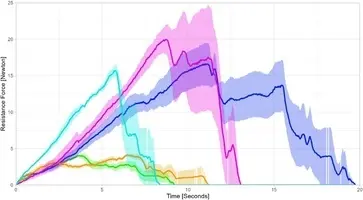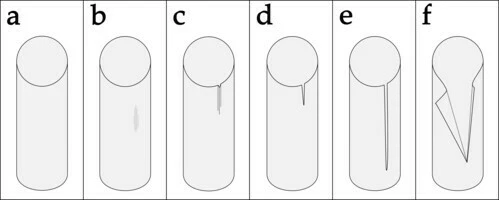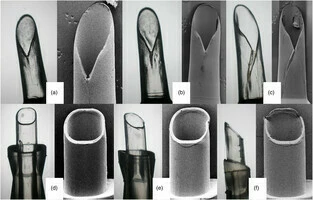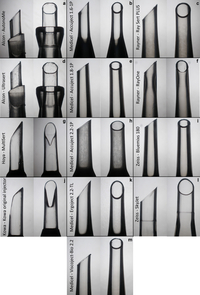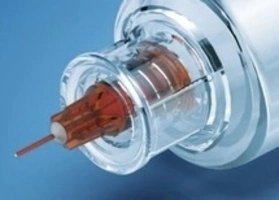
A laboratory analysis of the variation in resistance force during intraocular lenses injection by modern injectors and assessment of damage to the injector.
In Research, May 11, 2026A study of postoperative inflammation after femtosecond laser-assisted cataract surgery showed that compared that to conventional phacoemulsification, inflammatory and oxidative stress mediators were increased in concentration in the aqueous humor.
In Research, Jan 30, 2026In a laboratory study, both Acunex Quantum and RayOne EMV are suitable for mini-monovision. ### Happy Christmas from the Apple Lab!
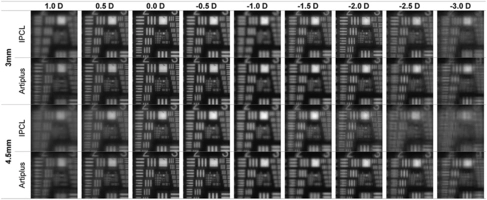
In Research, Dec 24, 2025Laboratory study of Ophtec's Artisan versus the Care Group's IPCL
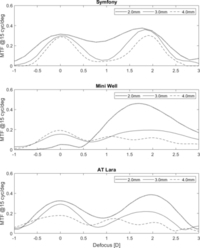
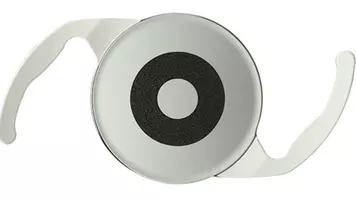
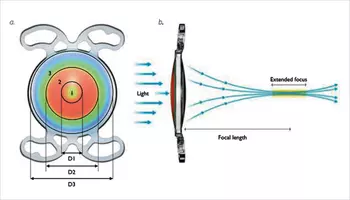
In Research, Oct 20, 2025EDoF lenses allow cataract and refractive-lens-exchange patients to have improved intermediate-distance vision. The lenses are made of different materials that have different chemical and physical properties. Their optical design is also different. We compared them in an optical quality analysis.
In Research, Jul 24, 2025We set out to study IOL exchange in patients who had IOL complications but otherwise had healthy eyes and we found visual and refractive outcomes were generally good. Changing the lens does not cause a significant change in aberrations. Intra- and postoperative complications were mostly mild and ...
In Research, Jun 30, 2025IOL simulators, where the patient can experience vision through IOLs prior to IOL implantation, are gaining interest among researchers and clinicians. We examined the correlation between one look-through simulator and the optical properties of modern IOLs, that we measured using an IOL metrology ...
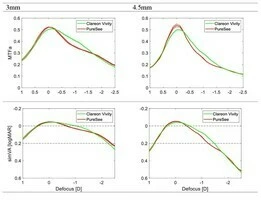
In Research, Jun 25, 2025We compared two hybrid refractive-diffractive IOLs with enhanced depth of focus.
In Research, May 20, 2025Counselling after IOL calcification
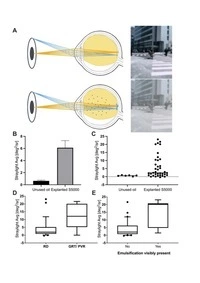
In Research, Feb 09, 2025Researchers studied straylight in explanted silicone oil samples to predict emulsification, finding increased straylight in samples from patients with visible oil droplets and specific indications, suggesting it as an early indicator for timely silicone oil removal.
In Research, May 28, 2024A rare case of intraocular lens (IOL) calcification in a patient with Ehlers-Danlos syndrome was studied, highlighting the importance of considering patient host factors in IOL selection.
In Research, May 27, 2024Researchers have developed a novel intraocular lens (IOL) made of crosslinked polyisobutylene (xPIB), which showed promising results in terms of material quality and optical performance. The Eyedeal lens demonstrated lower glistening density and a higher contact angle compared to the AcrySof lens...
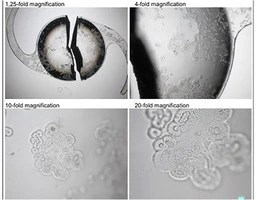
In Research, Mar 11, 2024Researchers studied how silicone oil adhesion to intraocular lenses (IOLs) affects straylight, finding significant increases in straylight. The study also showed that the cleaning solution F4H5 can reverse straylight values, but surface changes remain.
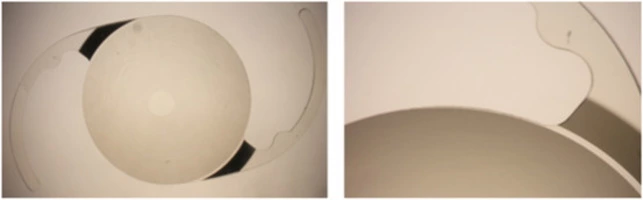
In Research, Nov 26, 2023Comparing Multisert and AutonoMe IOL injectors, a study found both allowed safe implantation, but Multisert showed more consistent behavior and less injector damage.
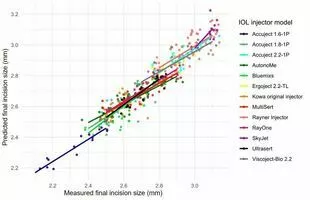
In Research, Sep 26, 2023Researchers analyzed 409 incisions from 13 IOL injector models to identify factors affecting final incision size in cataract surgery, finding that injector tip diameter, preoperative incision size, insertion depth, and incision length significantly impact final incision size.
In Research, Jun 29, 2023Forschende analysierten 409 Inzisionen von 13 IOL-Injektormodellen, um Faktoren zu bestimmen, die die endgültige Inzisionsgröße bei der Kataraktoperation beeinflussen, und fanden, dass Injektorspitzendurchmesser, präoperative Inzisionsgröße, Einführtiefe und Inzisionslänge die endgültige Inzision...
In Research, Jun 29, 2023Researchers introduced dynamic stimulation aberrometry (DSA) to objectively measure binocular accommodation in 91 patients, finding that accommodative amplitude decreases with age and that DSA records pupil motility dynamically.
In Research, Apr 29, 2023A recent study analyzed the recommended incision sizes of 13 intraocular lens injector systems in cataract surgery, finding that manufacturers' recommendations often lead to intraoperative incision enlargement, and in some cases, require larger incisions than recommended.
In Research, Feb 16, 2023"Intravitreal Application: Physicochemical Properties of Drugs Dissolved in Silicone Oils of Different Density in Comparison to the Porcine Vitreous Body" by Hammer et al. (2022) investigates the distribution of anti-infective drugs in silicone oil-filled eyes compared to natural porcine vitreous...
In Research, Jul 12, 2022The study examined the effects of biological media on silicone oil used as an intraocular tamponade in retinal detachment surgery. It found that prolonged exposure to the eye does not alter the oil's physicochemical parameters, but the addition of high-molecular-weight components may decrease emu...
In Research, Feb 06, 2022Researchers compared the injection times of high-viscosity silicone oils using polyimide and metal cannulas. Polyimide cannulas significantly reduced injection times, allowing for the use of ultra-high-viscosity oils, and prewarming the oil further decreased injection times.
In Research, Feb 06, 2022This study compares pupil size after three different strategies for intraocular lens (IOL) fixation: anterior iris-fixation, retropupillary iris-fixation, and in-the-bag implantation. The results show that all three strategies do not impair pupil constriction in normal light conditions, but retro...
In Research, Nov 26, 2021ESCRS offers educational resources, including the "ESCRS 100" video series, live streaming of cataract surgery, and the ESCRS IOL Calculator.
In Research, Oct 10, 2021The study compared a new intraocular lens (IOL) injector system, multiSert, against three standard injector systems in porcine eyes. The results showed that multiSert achieved better results in incision enlargement, ease of use, delivery time, and performance when used with the appropriate incisi...
In Research, Jun 15, 2021The study analyzed corneal topography data from 641 elderly patients to assess mid-peripheral astigmatism. It found that central corneal astigmatism differs from mid-peripheral measurements, with a greater difference in patients with against-the-rule, oblique, and high astigmatism. The magnitude ...
In Research, Apr 08, 2021Researchers used high-resolution optical coherence tomography to study the correlation between localized calcification on intraocular lenses and straylight, finding a significant link between the two.
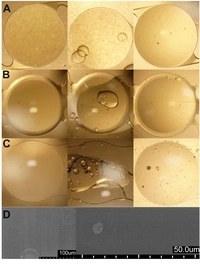
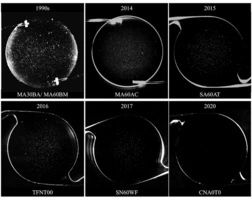
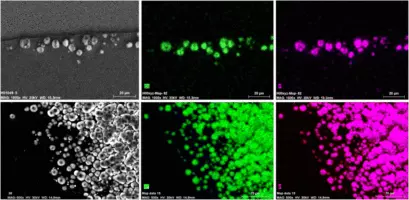
In Research, Mar 29, 2021Study quantifies the decrease in glistening formation in Alcon's hydrophobic acrylic intraocular lenses over the past three decades, with the new Clareon material showing the lowest number of microvacuoles.
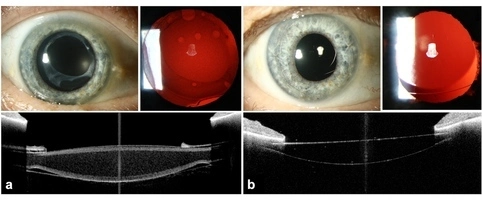
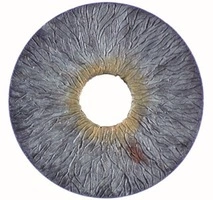
In Research, Feb 05, 2021A study evaluated the aesthetic outcome of iris reconstruction using a custom-made artificial iris prosthesis in patients with traumatic partial or total aniridia. The results showed good aesthetic outcomes, with patients, eye doctors, and laymen rating the overall aesthetic outcome highly. Pupil...
In Research, Aug 18, 2020Researchers assessed the optical quality of monofocal intraocular lenses (IOLs) sutured to an artificial iris, finding that while the lenses' modulation transfer function (MTF) decreased slightly, the changes were clinically irrelevant.
In Research, Aug 05, 2020Researchers analyzed explanted intraocular lenses from polypseudophakic eyes with supplementary sulcus-supported lenses, finding calcification in both capsular bag and supplementary lenses, with varying morphology and patterns related to environmental factors and comorbidities.
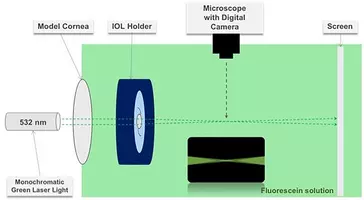
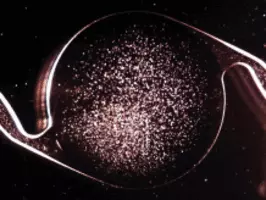
In Research, Jul 27, 2020The study visualized and analyzed the optical performance of four intraocular lens (IOL) models using a ray propagation imaging technique and modulation transfer function (MTF) measurements. The IOLs included a monofocal, bifocal, trifocal, and extended-depth-of-focus (EDOF) lens. The results sho...
In Research, Feb 05, 2020This study compares the image quality of three extended depth-of-focus (EDOF) intraocular lens models in monochromatic and polychromatic light. The results show that EDOF IOLs are more resistant to chromatic effects and provide better through-focus performance than monofocal IOLs, but differences...
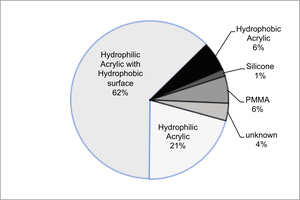
In Research, Jan 20, 2020The Apple Lab research team analyzed 200 intraocular lens (IOL) explants, finding that the main reasons for explantation were IOL opacification (76.5%) and dislocation (13.5%). Most explants were hydrophilic acrylic lenses from a single manufacturer.
In Research, Jan 18, 2020Researchers evaluated the visual outcomes of 13 cataract patients with a small-aperture IOL in one eye and a segmental-refractive bifocal IOL in the other, showing improved binocular visual results and minimal photic phenomena.
In Research, Sep 12, 2019Glistenings in hydrophobic acrylic intraocular lenses (IOLs) are fluid-filled microvacuoles that can negatively impact visual function. Studies have shown that severe glistenings can mildly reduce contrast sensitivity and visual acuity. The formation of glistenings is highly dependent on IOL mate...
In Research, Jul 01, 2019Hydrophilic intraocular lenses can opacify due to calcium deposition after pars plana vitrectomy and intravitreal gas injection, requiring IOL explantation.
In Research, Dec 27, 2018"CSI Heidelberg Episode 2 focuses on multifocal and EDOF (Extended Depth of Focus) intraocular lens (IOL) technology, highlighting their features, benefits, and challenges.
In Research, Oct 01, 2018Researchers at the David J Apple Lab studied glistening formation and light scattering in six hydrophobic-acrylic intraocular lenses, finding glistenings in five models but not in the Kowa IOL.
In Research, Sep 14, 2018The study evaluated the clinical outcomes of the Mini WELL Ready extended-depth-of-focus intraocular lens (EDOF-IOL) in 14 cataract patients. The lens provided good postoperative functional results at far and intermediate distances, with high rates of spectacle independence and satisfaction in ev...
In Research, Aug 28, 2018The latest paper from the David J Apple Lab, titled "The Effect of a Spectral Filter on Visual Quality in Patients with an Extended-Depth-Of-Focus Intraocular Lens," has been accepted for publication in the American Journal of Ophthalmology. The study examines the impact of spectral filters on vi...
In Research, Aug 19, 2018New research from the David J Apple Lab reveals that pars plana vitrectomy with gas injection increases the risk of secondary calcification in hydrophilic acrylic intraocular lenses, necessitating IOL exchange.
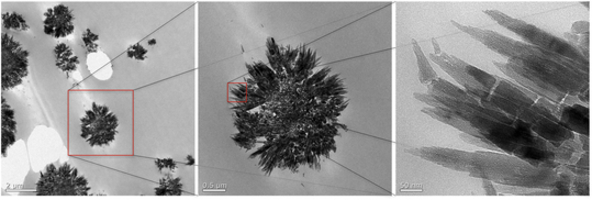
In Research, Jul 01, 2018Researchers at the David J Apple International Laboratory for Ocular Pathology analyzed 13 hydrophilic intraocular lenses (IOLs) that became opacified after posterior lamellar keratoplasty, finding that the opacification was caused by calcium phosphate deposits on the IOL surface. This opacificat...
In Research, Aug 22, 2017"CSI Heidelberg Episode 3 focuses on multifocal and extended depth-of-focus (EDOF) intraocular lens (IOL) technology, highlighting the differences and working principles of various presbyopia-correcting IOLs."
In Research, Aug 30, 2016The Winner - Best Video at the annual meeting of ESCRS 2018 in Vienna. This is the first epsiode of a series about the work done in the laboratory. The first video was shot in a CSI: Crime Scene Investigation style. The video series informs the viewer how we operate.
In Research, Aug 30, 2016The David J Apple Lab team and UK clinicians published a study on intraocular lens opacification after intracameral injection of recombinant tissue plasminogen activator to treat inflammatory membranes following cataract surgery.
In Research, Mar 18, 2015